PRESTO PLANS




Sent straight to your inbox
CLICK HERE TO ACCESS
Sign up to receive 10 ready-to-use ELA resources your students will love!
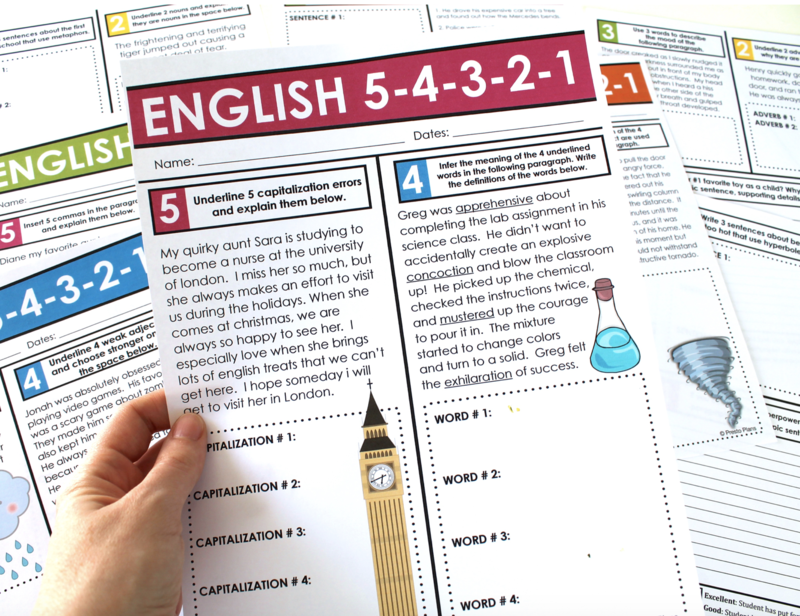
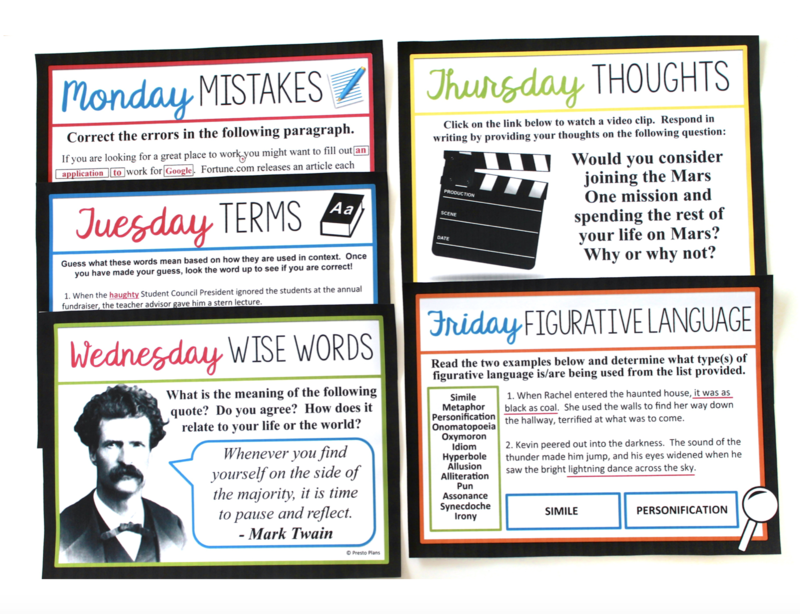
10 FREE ELA RESOURCES








Teaching “The Necklace” by Guy de Maupassant
The Necklace by Guy de Maupassant may have been published in 1884, but its themes feel surprisingly modern for today’s students. The way de Maupassant uses Mathilde to explore image, comparison, and social pressure connects naturally to the influencer culture students see on TikTok and Instagram. As a result, students are often quick to make thoughtful, relevant connections that lead to strong classroom discussions.
If you’re wondering how to approach teaching “The Necklace” by Guy de Maupassant in middle or high school ELA, I’ve got you covered! Here are my tips for tackling this classic Parisian short story from start to finish.

Build Background Information
When teaching any short story, including “The Necklace” by Guy de Maupassant, I like to start by helping students understand essential background information about the author, as well as the text itself.
First, I share that Guy de Maupassant, who was born in Normandy in 1850, is regarded as one of France’s finest writers. From here, I explain that when “The Necklace” was published in 1884, the roles of Parisian men and women were clearly defined in a social hierarchy. The upper-class citizens were incredibly wealthy, while there was very little money for those in the lower classes. I also like to share more about how marriages were arranged at the time. Students are often surprised to learn that while marriages between men and women of different social classes were slowly becoming more common at the time, this required the person of lower status to be “noticed” by the elite.
Pre-Reading Discussion and Activity
I find “warm-up” activities can often help students prepare to read a new text. I approach teaching “The Necklace” by introducing some of the story’s themes and ideas with a quick, interactive whole-class task. To begin, I like to display a series of statements to the class. Students who agree with the statement must stand up, and those who disagree should remain seated.
Some of the statements I like students to consider include:
- You can tell a lot about a person by how they look and what they own.
- What others think about you is important.
- All people are greedy and materialistic.
This activity often sparks an interesting conversation and can nicely tie into a more structured class discussion. This can take many forms, depending on your particular group. Sometimes, I like to set up “conversation stations” around the classroom for students to rotate through, with discussion prompts provided at each station. Other times, students might benefit from a whole-class discussion or an opportunity to consider various talking points through a think-pair-share approach.
TEACHING TIP: Whatever approach you choose during the pre-reading discussion, I find it useful to bring the whole class back together to wrap up the conversation. This helps to re-focus the group and sets the tone for reading.

Reading “The Necklace” by Guy de Maupassant
Now it’s time to read! I like to consider the dynamic of each class when teaching “The Necklace” by Guy de Maupassant – some groups of students are very independent readers, while others require more support.
If your readers need a bit more structure, it can also be useful for them to experience the story twice. First, I like to read the story aloud from beginning to end (while students follow along with their own copy). From here, I ask them to re-read the story independently, in pairs, or in small groups. During the second reading, I like them to highlight or annotate the text, paying particular attention to specific literary elements, such as characterization or examples of irony.
Post-Reading Discussion and Comprehension Quiz
Once everyone has had a chance to read “The Necklace,” I like to bring the class together for a post-reading discussion. This helps to ensure that no important details are missed and that students can clear up any misunderstandings. To guide this discussion, I like to ask students to consider Mathilde’s life before and after she borrowed – and lost – the “diamond” necklace. This can often spark a conversation about the “value” of diamonds, especially when it is so difficult for people to tell if they are real or fake!
I sometimes find that at this stage, a comprehension quiz can help me quickly assess students’ understanding of the key plot points and details in the story before we move on to more in-depth analysis.
Vocabulary Matching Game
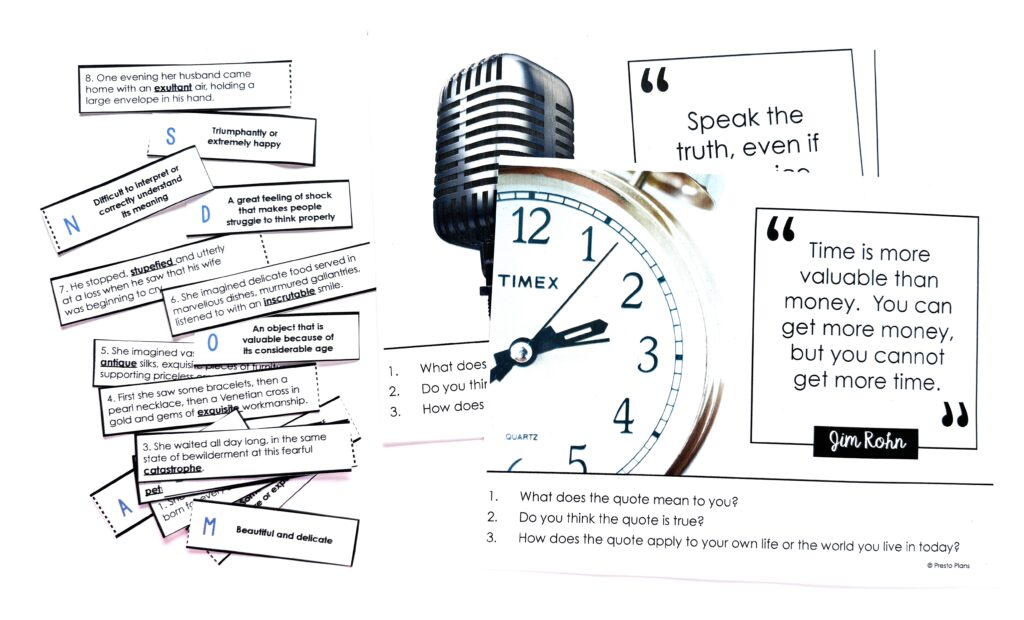
One of the things I like most about teaching “The Necklace” by Guy de Maupassant is the opportunity for students to engage with complex vocabulary. I find that interactive vocabulary activities – including collaborative games – can help to reinforce key terms from the story in an engaging way. This game also helps to strengthen students’ literacy skills, as they use context clues to determine the meaning of unfamiliar words.
For this activity, students work in pairs or groups to match vocabulary terms from the story (including petulantly, exquisite, and catastrophe) with their definitions. When all the words are correctly matched, a mystery word is revealed!
Characterization Activities
Looking to help your students develop a stronger understanding of characters – including their qualities and motivations? Encourage them to take a closer look at the complex character of Mathilde with these engaging activities:
CHARACTER TRAIT ANALYSIS:
In this task, students must identify three traits that sum up Mathilde’s character at different points of the story. Using a graphic organizer, students must provide a specific quote from the text to support each of their choices, as well as an explanation of their evidence. This activity can create an excellent springboard for further discussion of Mathilde as a dynamic character, as well as the lasting consequences of her choices.
MATHILDE’S SOCIAL MEDIA:
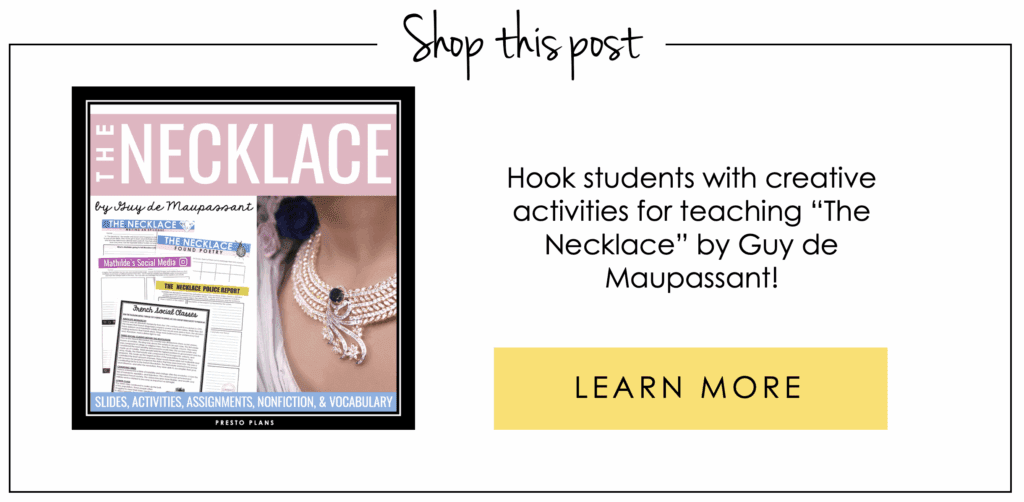
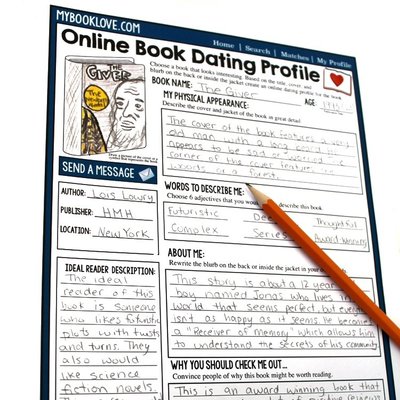
Teach “The Necklace” by Guy de Maupassant with a 21st-century twist! This creative activity asks students to imagine Mathilde as a modern-day woman with a social media account. As they write four different social media posts as “Mathilde” that reflect her mindset at different points in the story, they must include images, captions, and hashtags.

Nonfiction Reading: French Social Classes
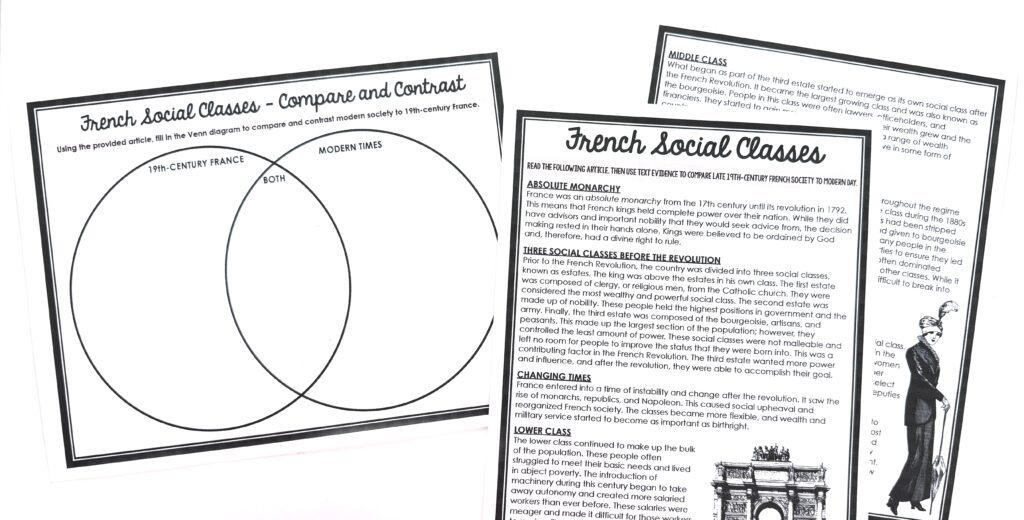
If your students are fascinated by the ins and outs of 19th-century French society, tap into their curiosity with a nonfiction reading! As students read a short nonfiction article about life in France in the 19th century, they can compare and contrast the world Mathilde lives in with society today.
Once students have finished the readings, they can work alone or in pairs to complete a Venn diagram, noting the various similarities and differences between France in the 1800s and the present day. This activity helps to strengthen nonfiction reading skills and builds background knowledge to help students better understand Mathilde’s character.
Extension Activities for Teaching “The Necklace”
Extension activities can strengthen students’ understanding of any short story and help them explore connections to other texts and literary forms, as well as their personal experiences.
Here are two extension activities I love to share with students when teaching “The Necklace” by Guy de Maupassant:
FOUND POETRY:
In this activity, students create a poem using only words and phrases pulled directly from “The Necklace” by Guy de Maupassant. I like to encourage them to select language that reflects a central theme or idea, and rearrange the words to create new meaning. Some of the themes students may wish to explore include greed, loss, wealth/status, or lies. Through close reading and careful word choice, students build and reinforce vocabulary skills while engaging more deeply with the story.
SOCIAL MEDIA PAIRED DISCUSSION:
Many of the themes of “The Necklace” resonate with middle and high school students because they are able to make clear connections between Mathilde’s experiences and what they see on social media. For this activity, I like to provide discussion prompts to guide pairs or small groups of students in conversation.
Some of the questions I ask them to consider are:
- Does your personal social media fully represent all aspects of your life and feelings?
- Have you ever felt jealous of others when looking through their social media?
DIGITAL COLLAGE:
In this visual task, students collect a variety of digital images and words to represent Mathilde’s idea of luxury. From here, they can arrange their images into a “collage” on a digital slide and – if time permits – share their creations with each other. To extend this task even further, students can also create a digital collage containing words and images that represent their own ideas of luxury.
Creative Writing Activities for “The Necklace”
I often like to wrap up a short story unit with an engaging writing assignment. These activities allow students to showcase their reading comprehension skills while tapping into their creativity!
Here are two of my favorite creative writing tasks to use when teaching “The Necklace” by Guy de Maupassant:
“THE NECKLACE” POLICE REPORT
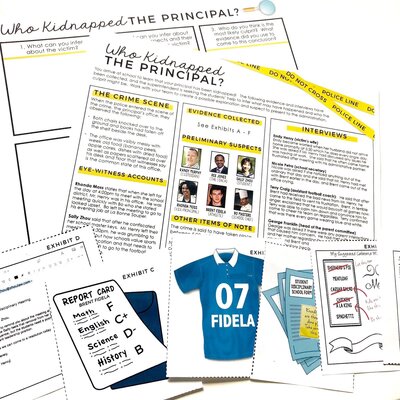
Students take on the role of a police officer in this writing activity, which re-frames the plot of “The Necklace” in a structured, information-based format. I like to provide students with an easy-to-follow template, which prompts them to include details about the crime scene, the suspects, various witness testimonies, and other evidence.
WRITING AN EPILOGUE FOR “THE NECKLACE”
This creative writing assignment asks students to imagine what happens to Mathilde after the end of the story. A graphic organizer and clear writing prompts support the planning process and help students carefully consider the evolution of Mathilde’s character, as well as the main themes of the story. Once students have written their epilogues, I like to have them share their work by reading their stories out loud in small groups.
There you go! Whether you’re brand new to teaching “The Necklace” by Guy de Maupassant, or looking for new ideas to update your existing short story unit, I hope my tips and tricks help you make the most of this classic French story.
Looking for more short stories to share with middle and high school ELA students? Check out my posts on Teaching “The Veldt” by Ray Bradbury and Teaching “The Chaser” by John Collier!
Search the blog for what you are teaching



GIVEAWAYS
sent straight to your inbox!



share this post