PRESTO PLANS





Sent straight to your inbox
CLICK HERE TO ACCESS
Sign up to receive 10 ready-to-use ELA resources your students will love!
10 FREE ELA RESOURCES










Teaching “The Pedestrian” by Ray Bradbury
In my experience, nothing hooks a class of reluctant teenage readers more effectively than a compelling science fiction story. Classic texts, written in the 1950s during the “Golden Age” of science fiction, still hold a lot of appeal for younger readers! This is why I love teaching short stories like “The Pedestrian” by Ray Bradbury in middle or high school English language arts. First published in 1951, “The Pedestrian” is set in a quiet, futuristic city. When Leonard Mead is stopped by a robotic police car during his nightly walk, his “unusual” habits and hobbies fall under scrutiny.
One of the things I like best about teaching “The Pedestrian” by Ray Bradbury is the opportunity for students to think critically and creatively about the complicated relationship between society, technology, and individuality. I’m sure your students will be able to identify many connections between the world of “The Pedestrian” and their own experiences with technology today!
Wondering how I approach teaching “The Pedestrian” by Ray Bradbury in middle or high school ELA? Here is my start-to-finish process for making the most of this classic science fiction text.
Pre-Reading Discussion:
Even before I introduce the story itself, I like to begin teaching “The Pedestrian” with a quick class discussion. I find this approach encourages students to make personal connections to the issues and themes of the story, which you can circle back to as they read and analyze the text.
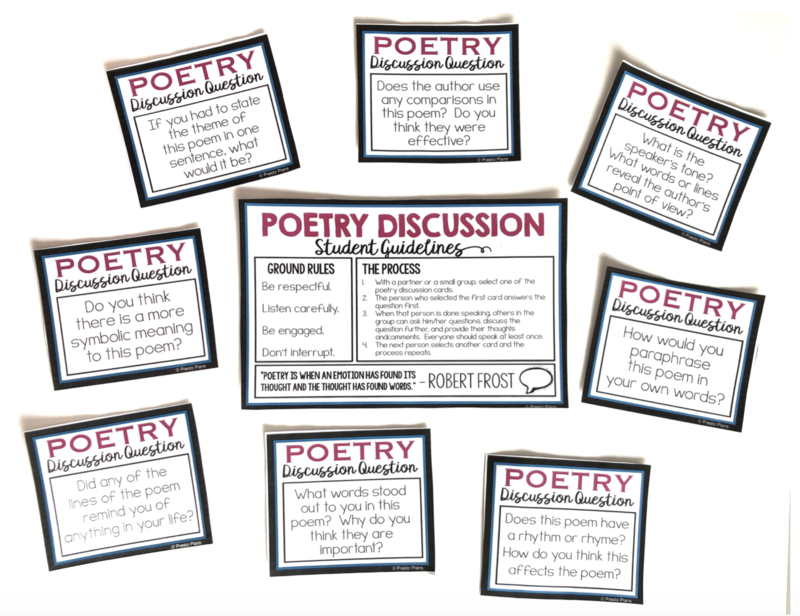
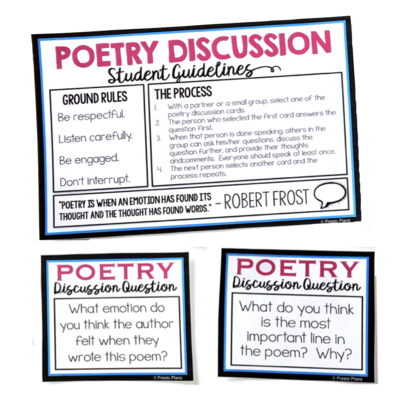
One quick way to get students talking is to share a series of prompts for thoughtful discussion. My favorite discussion prompts for teaching “The Pedestrian” by Ray Bradbury include:
- Have you ever had an experience with a police officer?
- Do you like to go for a walk? What do you like (or dislike) about walking alone?
- Do you think our society is too reliant on technology? (This one is a personal favorite, because it always seems to spark a lively discussion!)
Depending on your group, you can approach your discussion in a few different ways. The most straightforward option is to display the questions to the whole class and facilitate a discussion together. But if you want to mix things up, you have a few additional options. For example, consider setting up these questions as stations for students to visit, or providing them on cards to table groups or seating partners. Alternatively, student responses can be written on sticky notes. These could then be sorted and categorized on chart paper.
Build Background Knowledge:
Once students are “warmed up” from the pre-reading discussion, it’s time to introduce the text! Sharing information about the author’s background and the historical context in which the story was written often helps students gain a better understanding of the text.
When teaching “The Pedestrian,” I begin the lesson by sharing some biographical information about Ray Bradbury. Specifically, I highlight that while Bradbury was an accomplished science fiction writer, he approached many technologies – including computers – with caution. Many of his works reflect these concerns. Specifically, Bradbury worried that people might become over-reliant on technology, limiting individuality, creativity, and personal contact.
Reading “The Pedestrian” by Ray Bradbury
When you feel students have enough background information to spark their interest and provide context for the story, it’s time to read! When teaching “The Pedestrian” by Ray Bradbury, I recommend reading the story aloud to students. This way, you can draw students’ attention to the way Bradbury’s writing enhances the story’s tone and atmosphere.
Alternatively, you can have students read the story independently. A third option involves splitting the class into two groups. Students can choose (with some direction from you) whether they read the story on their own, or whether they read it with support. There are also a number of audio versions of “The Pedestrian” that may appeal to your class!
Post-Reading Discussion
After everyone has had the opportunity to read “The Pedestrian” by Ray Bradbury, the next step in my teaching process involves “unpacking” the story with a post-reading discussion. Just like the pre-reading discussion, this can take a variety of different forms, depending on how much time is available and the unique dynamic of your class.
I like to begin by asking quite general questions (For example, “Did you enjoy the story?”). I find that most students are ready with a “yes” or “no” answer, and then some gentle prompting encourages them to justify their initial impression and think more deeply about the text. From here, you can move on to more complex questions about the story’s ending, and about the relevance of the story to people today.
Figurative Language in “The Pedestrian”
Because “The Pedestrian” by Ray Bradbury is a relatively short story, it can be an excellent entry point for teaching literary devices. I find that exploring concepts like figurative language with a short story is less intimidating for middle and high school students. This approach can help build and reinforce skills before tackling a longer text.
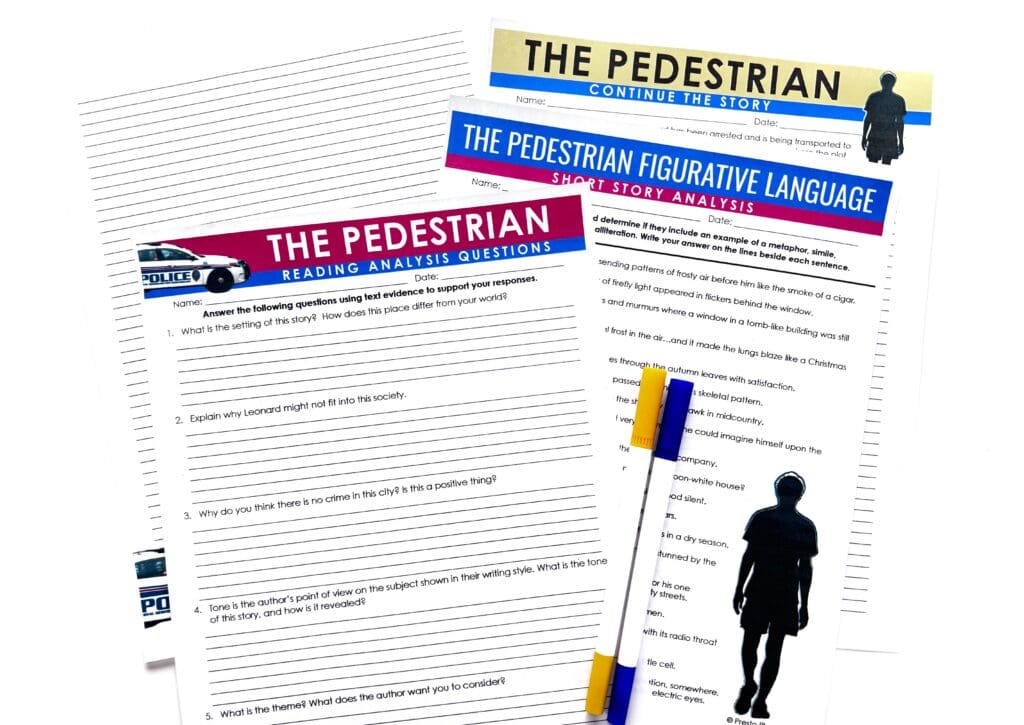
In “The Pedestrian,” Bradbury uses figurative language to enhance imagery and description throughout the story, creating a distinctive, eerie tone. Students can work independently, in pairs, or in small groups, as they examine a series of sentences from the story containing different types of figurative language. I like to encourage students to refer back to the text and purposefully re-read each example in context as they identify the type of figurative language it contains.
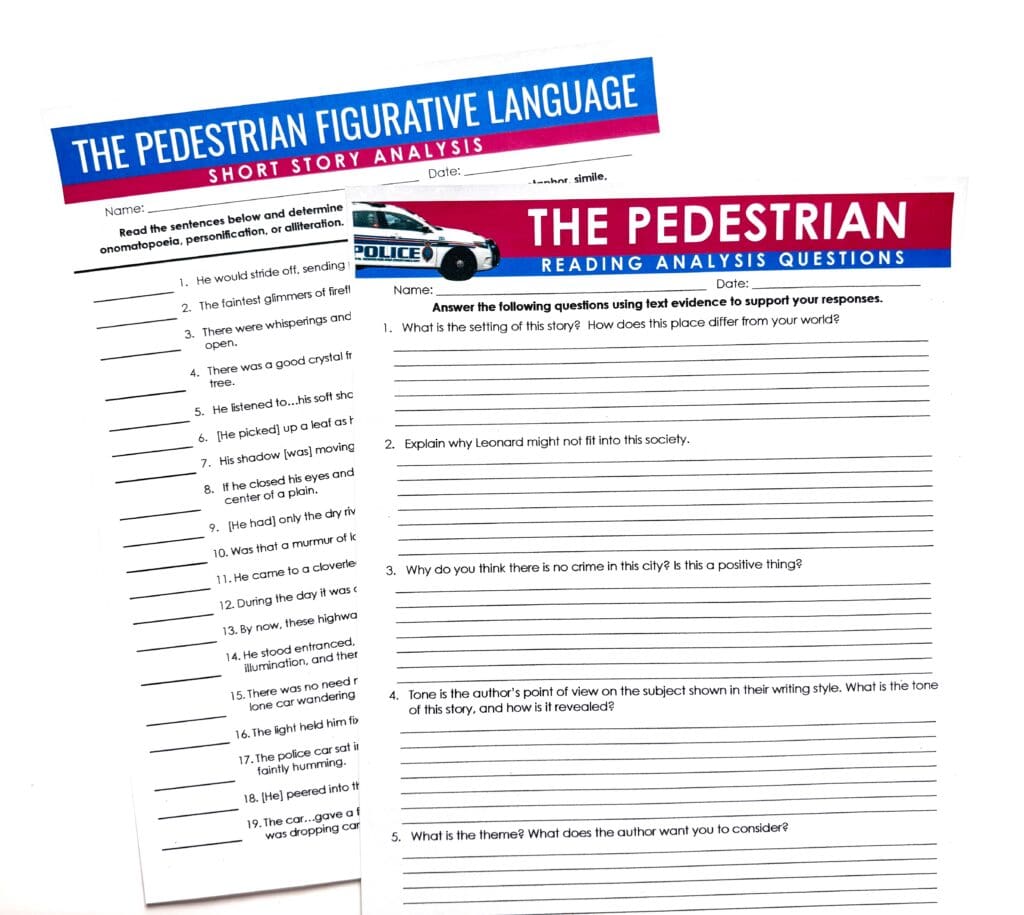
Reading Questions for Teaching “The Pedestrian”
From here, it’s time for students to showcase their reading comprehension skills! When teaching any short story, including “The Pedestrian” by Ray Bradbury, I find that comprehension questions can be a useful tool. These help me check students’ overall understanding of the text, as well as more targeted literary concepts.
Using a printed copy of the story for reference, students respond to a series of questions about plot, characterization, setting, tone, and the story’s broader themes. I like to circulate as students complete their responses. Encourage them to provide specific, relevant evidence from the text to support each answer.
Writing Assignment: Continue The Story
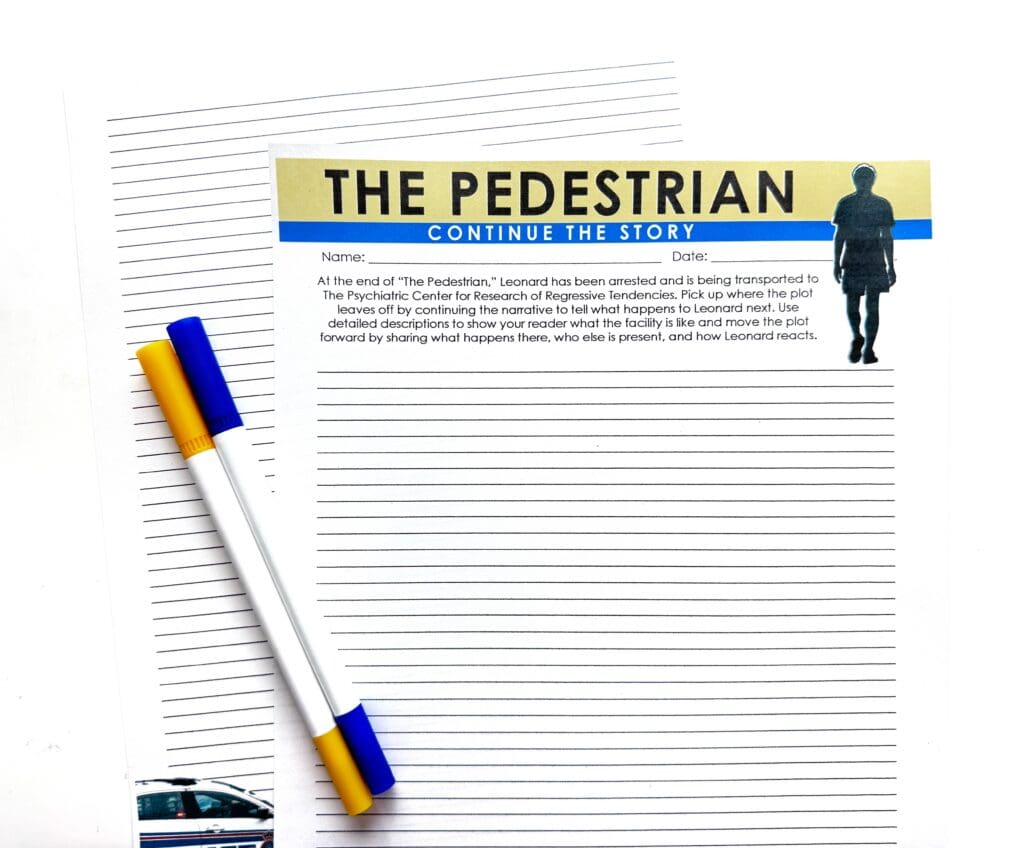
If time permits, why not try a creative writing task? This can be a useful way for students to demonstrate their understanding of the setting and characters in “The Pedestrian.” At the end of the story, Leonard is arrested and transported to The Psychiatric Center for Research of Regressive Tendencies. In this creative task, students must pick up where the plot of “The Pedestrian” leaves off, composing a fictional account of what happens to Leonard next.
I like to encourage students to refer back to Ray Bradbury’s detailed descriptions in “The Pedestrian” in their narrative writing. They can use these as inspiration for their own descriptions of what the facility is like, and what happens there.
Extension Activity: Video Interpretation
To wrap up teaching “The Pedestrian” by Ray Bradbury, I love to show students a video interpretation of the story. The Ray Bradbury Theater television series aired in the late 1980s and early 1990s, with many episodes scripted by Bradbury himself. The series included small-screen adaptations of a number of the author’s short stories, including “The Pedestrian.”
As students view the video version of “The Pedestrian,” I ask them to keep track of the similarities and differences between the screen production and the original text. Once they have finished viewing the episode, they can use their lists as the basis for an engaging class discussion about which version of “The Pedestrian” they prefer.
Whether you’re looking for a new short story to share with your students or want to add some fresh activities to your study of “The Pedestrian,” I hope you have a fantastic time teaching this suspenseful tale by Ray Bradbury!
Looking for more resources to support teaching Ray Bradbury’s short stories in middle or high school ELA? Check out these blog posts!
- Teaching “The Veldt” by Ray Bradbury
- Teaching “A Sound of Thunder” by Ray Bradbury
- Teaching “All Summer in a Day” by Ray Bradbury
Search the blog for what you are teaching




GIVEAWAYS
sent straight to your inbox!




share this post