PRESTO PLANS






Sent straight to your inbox
CLICK HERE TO ACCESS
Sign up to receive 10 ready-to-use ELA resources your students will love!
10 FREE ELA RESOURCES










Creative Activities to Teach Julius Caesar by William Shakespeare
If you’re feeling overwhelmed about teaching Shakespeare’s plays in high school English Language Arts, you’re not alone. It can be hard to know where to start when teaching a classic text like Julius Caesar – especially to 21st-century teenagers!
The good news is that teaching Shakespeare doesn’t have to be an intimidating experience. Many elements of Julius Caesar, including its central themes of power, loyalty, persuasion, and ambition, are just as relevant today as they were in Elizabethan England. I also find that Julius Caesar offers an ideal entry point into literary analysis. Once students become familiar with Shakespeare’s language and vocabulary, the fast-paced plot and compelling characters keep them engaged from beginning to end.
With a clear and purposeful strategy, teaching Julius Caesar can be a rewarding experience for your students (and for you!). Here’s my structured, creative approach to teaching William Shakespeare’s Julius Caesar in high school.
Teaching Julius Caesar: Setting Up
Before students begin to engage with the play itself, I like to provide them with tracking tools to support comprehension and draw attention to the author’s purpose as they read.
Julius Caesar Character Map
One challenge many students experience when reading Shakespeare’s plays is keeping track of large casts of characters. When teaching Julius Caesar, I like to offer high school students a reference system for keeping track of Shakespeare’s many characters. Before beginning the play, I provide students with a character map. This comprehensive graphic organizer helps them keep track of various characters and their relationship to Caesar.
Two versions of the organizer support differentiation. One contains characters’ names and blank spaces. On this version, students can jot down details about their appearance, actions, and interactions with others. An alternative version includes pre-filled details about characterization, and students can fill in the characters’ names as they encounter them throughout the play.

Julius Caesar Bad Vibes Omens
Throughout Julius Caesar, Shakespeare uses numerous literary devices, including foreshadowing and symbolism. I like to draw students’ attention to the most important omens in Julius Caesar. These include unusual animal behaviour, Calpurnia’s dream, and supernatural elements, including Caesar’s ghost. By pausing to record these omens as they occur in the text, students can consider their symbolic meaning and what they may foreshadow.

Teaching Julius Caesar: Act 1
In Act 1 of Julius Caesar, Roman citizens celebrate Caesar’s rise, although some officials worry about his growing power. By the end of the act, Cassius puts a plan in motion to convince Brutus that Caesar must be stopped.
As students consider Cassius’ actions, I ask them to add a modern twist! Re-imagining the conversation between Cassius and Brutus in Act 1, Scene 2, as an exchange of text messages brings Shakespeare’s words into modern times. This approach encourages students to consider the true meaning behind the text of the play. I find this is an effective and memorable approach to teaching Julius Caesar. It requires students to preserve the persuasive tactics and key ideas from the original script while crafting a contemporary dialogue based on text evidence.

Teaching Julius Caesar: Act 2
In Act 2 of Julius Caesar, students have the opportunity to dive more deeply into character analysis. In this section of the play, Brutus struggles with the decision to join the conspiracy, ultimately convincing himself that Caesar must be killed for the good of Rome. Meanwhile, Calpurnia’s dreams serve as ominous foreshadowing of Caesar’s fate, which students can note on their ongoing Bad Vibes Omens graphic organizer. When teaching Julius Caesar, I like to share two additional creative activities to support students’ growing understanding of both Brutus’ and Caesar’s qualities and motivations.
Brutus’ Diary Entries
Much of Act 2 centers on Brutus’ internal conflict as he weighs up whether to join the conspiracy against Caesar. This provides an excellent opportunity for students to explore additional perspectives. In this creative task, students create four different diary entries written “by” Brutus during the events of Act 2, Scene 1. As they use modern language to portray his inner turmoil, students must also support their writing with strong text evidence from the play.

Julius Caesar Social Media Page
One of my favorite ways to reinforce students’ character analysis skills is to add a 21st-century twist to Shakespeare’s cast of characters. I like to invite students to imagine that Caesar has a “Fakebook” social media page. As they consider how Julius Caesar would portray himself online, they must review what they know about his physical appearance, personality, motivations, and relationships with other characters. Best of all, this task often results in some very creative visual projects, which can make a fresh and engaging addition to a classroom or hallway display!

Teaching Julius Caesar: Act 3
Act 3 of Julius Caesar is packed with action and driven by significant plot – and character – development. When teaching Julius Caesar, I find it helpful to slow down during the third act, taking time to carefully read the text – and reinforce comprehension – with three different creative activities.
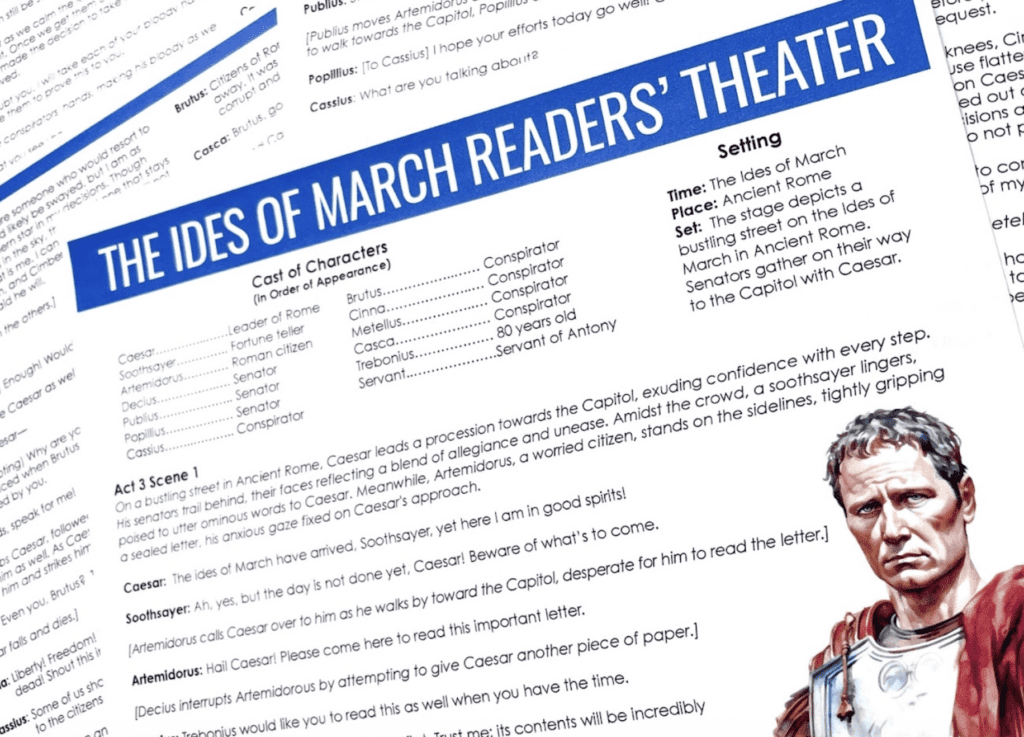
Ides of March Reader’s Theater
Act 3, Scene 1 of Julius Caesar is packed with dramatic tension, building to Caesar’s assassination. A reader’s theatre performance is an engaging way to immerse students in the emotional intensity of the scene. I like to provide students with a concise, five-page script, which reimagines Shakespeare’s writing in modern English. Perfect for classroom performances or small-group reading, this creative activity for teaching Julius Caesar allows students to embody the characters, adding an interactive component to this pivotal moment in the play.
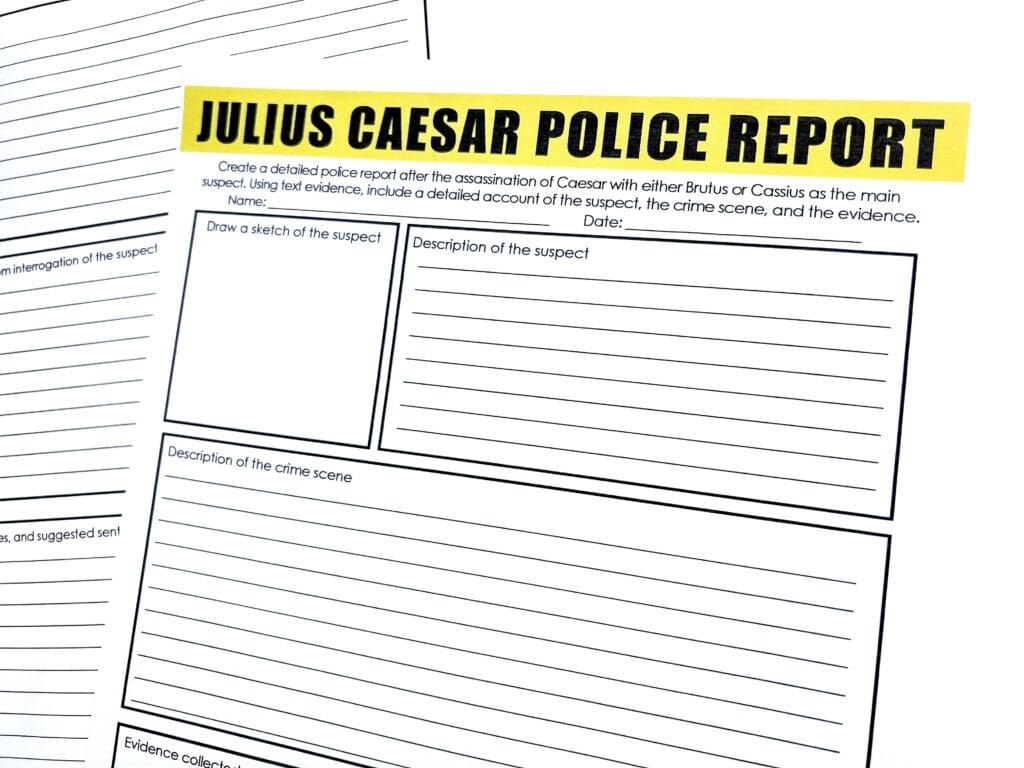
Julius Caesar Police Report
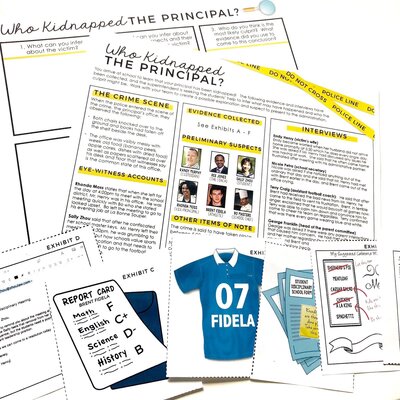
For this creative task, students must step into the role of a detective who is investigating the assassination of Caesar. As they prepare their “police report,” students re-read Act 3 for details to help them analyze the crime scene, identify suspects, and examine motives. Students can use a provided graphic organizer to keep track of their evidence and ensure all required details are included. Evidence gathered from the play must support the information in their final report.
Antony’s Speech: Rhetorical Devices
Mark Antony’s speech, delivered at Caesar’s funeral, is a pivotal moment in Julius Caesar. I like to spend some time helping students focus more deeply on this speech, considering its persuasive language. First, I guide students through a lesson on rhetorical devices, such as ethos, pathos, logos, repetition, irony, and rhetorical questions. Then, through a series of activities (including a mystery word activity, as well as a “parody” speech), students can consider how persuasion shapes public opinion in this powerful scene.

Teaching Julius Caesar: Act 4
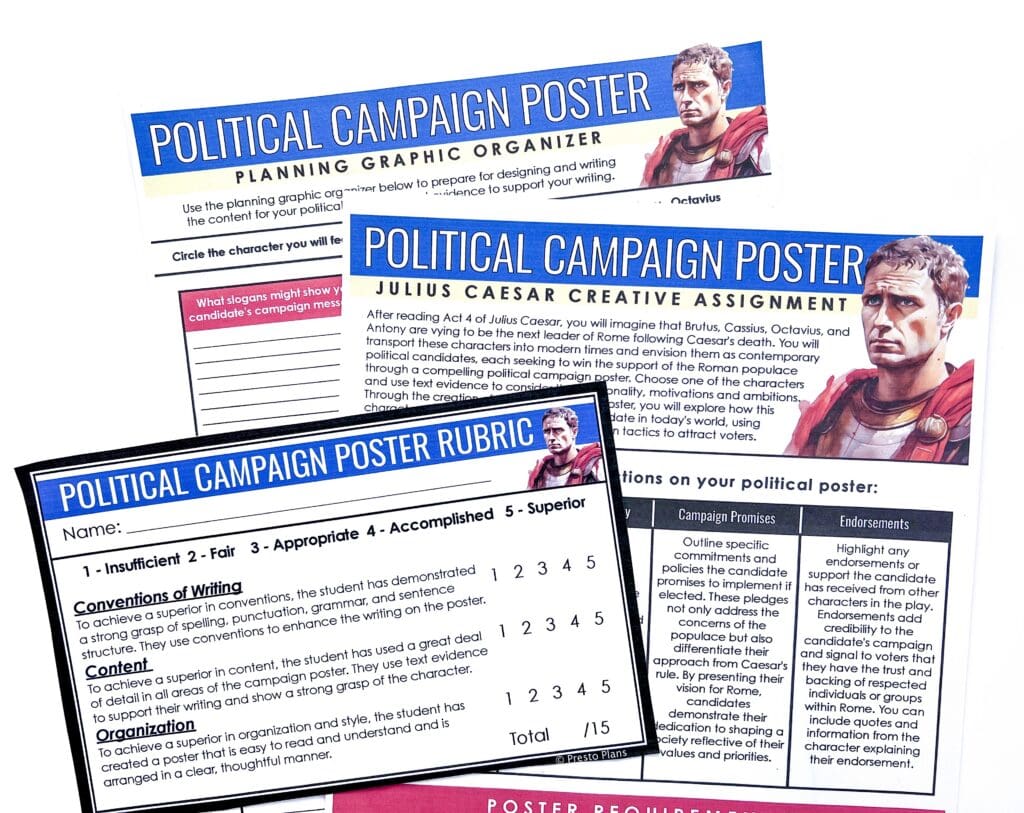
In Act 4 of Julius Caesar, the characters vie for leadership in the wake of Caesar’s death. I like to encourage students to consider Act 4 through the lens of a contemporary political campaign. As they design campaign posters for Brutus, Cassius, Octavius, and Antony, they must consider each character’s motivations, strengths, and ambitions. In addition, they can practice their persuasive communication skills as they create convincing posters for the candidates.
Teaching Julius Caesar: Act 5
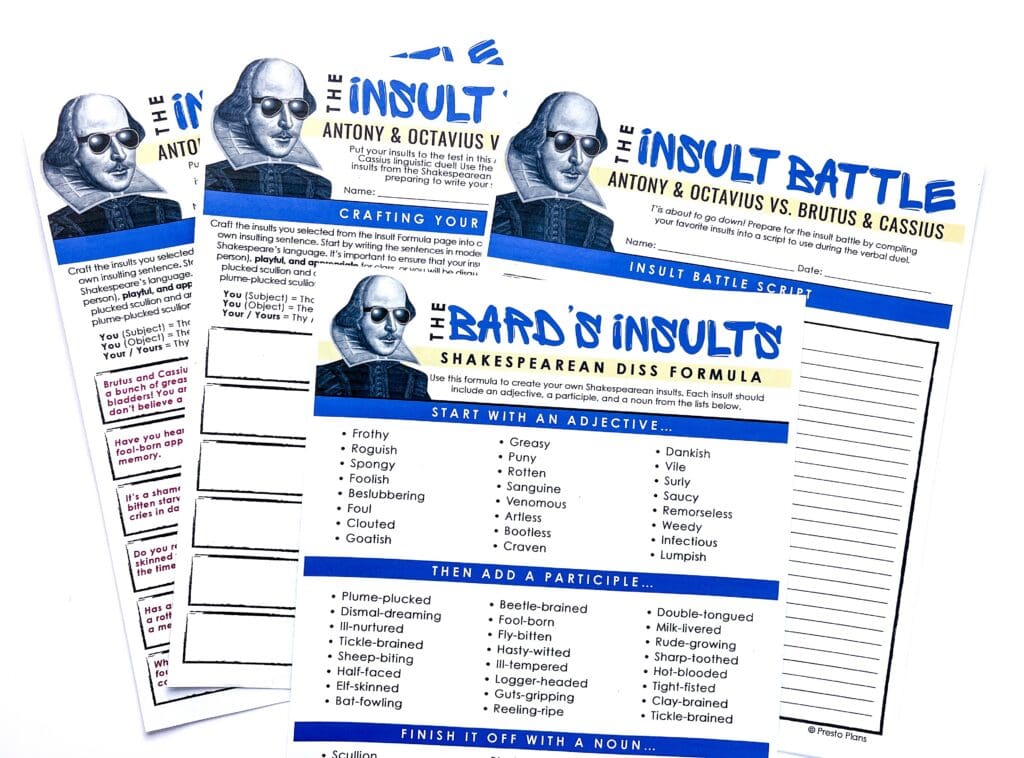
As Cassius, Antony, Brutus and Octavius exchange insults ahead of the Battle of Phillipi, this is a fun opportunity for students to engage in a little wordplay of their own. Encouraging students to decode and explore Shakespeare’s creative insults and turns of phrase can be a highly engaging and effective way to build vocabulary skills and reinforce comprehension. To add a creative – and memorable! – twist, I like to end the lesson with a spirited classroom duel. Here, students apply their understanding of Shakespeare’s language by modernizing his insults.
Teaching Julius Caesar: Post-Reading Activities
Once students have finished reading all five acts of the play, I like to provide them with meaningful post-reading activities that encourage them to step back and consider the play as a whole. From formal writing to a creative culminating project, here’s how I like to wrap up teaching Shakespeare’s Julius Caesar.
Julius Caesar Essay Topics
At the end of teaching a unit focused on a major text, like Julius Caesar, I like to have students complete a significant writing task, such as a literary analysis essay. This allows them to practice communicating their ideas clearly in writing, supporting their points with evidence from the text. You may like to offer students a choice of thought-provoking essay topics to explore in more detail. Alternatively, depending on your focus of study, you might like to select a single topic for the entire class.

Julius Caesar Theme Park Project
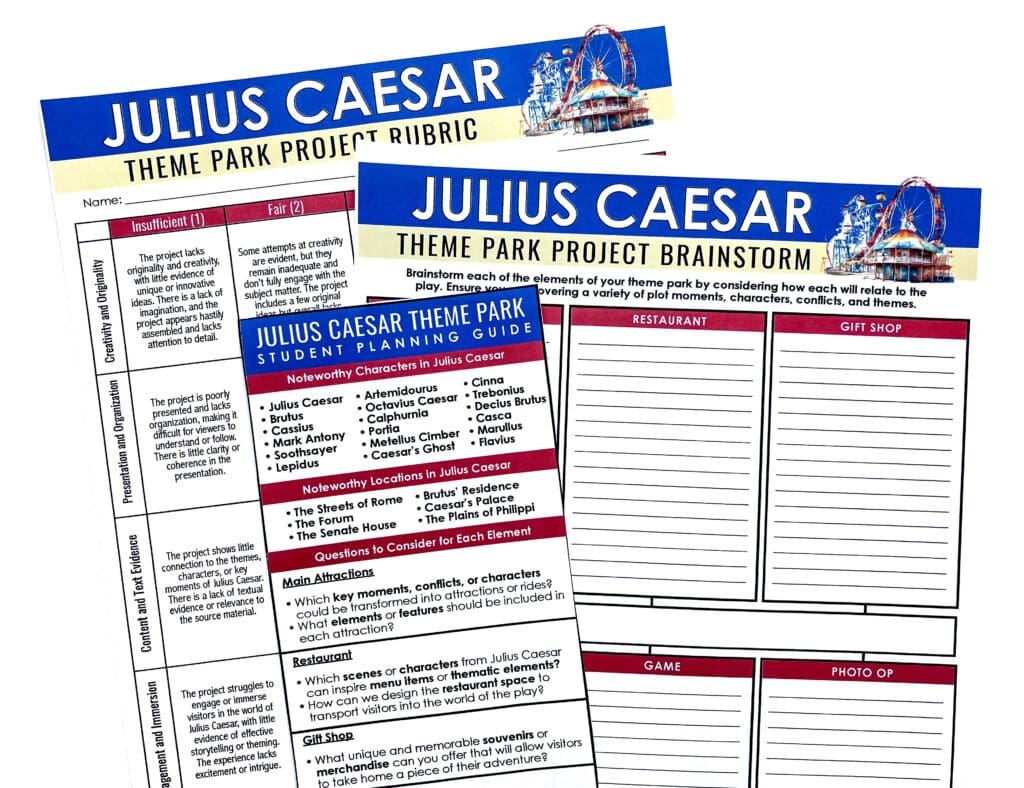
I love an end-of-unit project that inspires students to think creatively about the text. When teaching Julius Caesar by William Shakespeare, I love to invite students to take on the role of a theme park developer! In this role, they are tasked with bringing the play to life as an immersive entertainment experience! From rides and restaurants to live performances and attractions, every aspect of the park must be inspired by key moments, characters, and conflicts from the play. What I especially like about this task is its flexibility! Students can present their work in a range of different formats, including a diorama, presentation, or promotional booklet!
Whether you’re brand new to teaching Shakespeare or looking for creative activities to shake up your Julius Caesar unit, I hope this post gave you lots of fresh ideas! All of these creative activities (and much more!) are included in the ready-to-use drama unit below:
Looking for more support with teaching Shakespeare in high school ELA? Check out my blog post on Teaching Shakespeare in High School: Introducing The Bard!


Search the blog for what you are teaching




GIVEAWAYS
sent straight to your inbox!




share this post